Showing posts sorted by date for query paradise park. Sort by relevance Show all posts

Tuesday, 2 June 2026

MISS ELAINEOUS VISITS WESTMINSTER CATHEDRAL...

 Westminster Cathedral is the informal name for the Metropolitan Cathedral of the Most Precious Blood, and it's the mother church of the Roman Catholic faith in England and Wales.  It is the seat of the Archbishop of Westminster and is very much a working cathedral.  Holy Mass is held throughout every day; sometimes in Latin, sometimes in the form of a Solemn Mass and sometimes a sung Vigil Mass.

The nearest Tube stations are Victoria and St James's Park.  The cathedral dates from 1903, with its foundation stone being laid in 1895.
I love the way you have the sun striating over the Tower in this photo.

This is another view of the Campanile (Tower), which shoots 210 ft (64 m) into the air.  It has a viewing gallery (with a lift- it's seven floors up, but you don't have to climb stairs!)

The style of architecture is early Christian Byzantine, and is inspired by sixth century buildings in Ravenna, Italy, and also by St Mark's Basilica, in Venice...

...These in turn were inspired by the great domed church called Santa Sophia, in Constantinople (now Istanbul), which is considered to be an architectural masterpiece.

The cathedral is the largest Catholic church in England and Wales, and can seat up to 2,000 people.

It's not the first time I've visited here- the first was in 1997, after my first graduation, which was in nearby Central Hall Westminster.  Unfortunately, I no longer have photographs of that.

A cathedral takes its name from "Cathedra" or chair of the bishop; being a symbol of his authority and responsibility to teach the Christian faith.

In we go, and the first thing I feasted my eyes upon was this confessional.  The cathedral has 11 in total, as you'd probably expect from a building with a floor space that covers an area of about 5017m
² (54,000 square feet).

There are several little chapels off to the side of the nave, and this one's the Chapel of St Gregory and St Augustine.  St Gregory the Great became Pope in 590 AD, and St Augustine was a Benedictine monk from the same monastery in Rome.
The ninth Archbishop of Westminster, Cardinal George Basil Hume (1923-1999) is buried here.  

It's always important to look up as well as down, and these figures include St Augustine with a picture of Christ which he brought to England.
The mosaics in here were installed between 1902-04.

Behind that is the Baptistry, with a Byzantine-style baptismal font.

Next is the Chapel of St Patrick and the Saints of Ireland.  St Patrick (387-461 AD) is the Patron Saint of Ireland, and the bronze statue of him dates from 1961.

Next along is the Chapel of St Andrew and the Saints of Scotland.  The decoration was completed in 1916, and carried out by the Arts and Crafts Movement.

The Chapel of St Paul.  He travelled widely and converted many non-Jews to Christianity.  He was executed in about 64 AD.
The mosaics date from 1964-5, and I really love the stars on the inset dome.  They symbolise the Dome of Heaven, and connect earthly worshippers with the divine.

The Lady Chapel is dedicated to the Blessed Virgin Mary, who is much venerated in the Catholic faith.  Above the altar is Christ represented as the Tree of Life.

Over 100 animals, birds and insects are depicted here, in mosaic form.

Standing at the back of the cathedral, looking down the aisle towards the sanctuary.  The crucifix hanging down over the high altar is 30 ft high, and I do like the Gothic chandeliers.  

Standing in the nave, looking back towards the door.  Photography is allowed in the cathedral, just not whilst Mass- or Eucharist- is taking place.

Behind the high altar stands a crucifix and seven candlesticks, first used during the consecration of the cathedral in 1910.  Behind that is where the choir sit, and to the side are stalls for 
the priests, readers and altar servers.
This was as close as I could get- as you can see, the area's cordoned off.

The Church of the Blessed Sacrament sits next to the sanctuary (those being the two most sacred parts of the cathedral).  The Blessed Sacrament refers to the body and blood of Christ, represented by the bread and wine of the Eucharist.
This is an area for silent prayer, and the votive candles at the front of the chapel symbolise prayer.  The mosaics were installed between 1960-62.

This is the Chapel of St Thomas of Canterbury.  It is also known as the Vaughan Chantry, as here lies the tomb of the cathedral's founder, Cardinal Herbert Vaughan (1832-1903).

The mosaics above the altar here date from 2003-06, but it's quite hard to make then out from this photo, taken through the bars.

This is the Chapel of St Joseph.  Cardinal Hinsley, the fifth Archbishop of Westminster is buried in this chapel.  He died in 1943, and is known for encouraging people with his radio broadcasts during the Second World War.
The apse features the Holy Family- Jesus, Mary and Joseph, and is in the Byzantine style.

The ceiling mosaic was supplied by the Mosaic Workshop of London between 2003-06.

The Chapel of St George and the English Martyrs.  The altarpiece depicts the Crucifixion; with Christ as priest and king surrounded by St Thomas More and St John Fisher, who were two famous martyrs.

On the ceiling the mosaic design depicts the burning names of 40 Catholic martyrs of the 16th and 17th centuries.  The design was completed in 2016.  This cathedral definitely has a "modern" feel about it, compared to some of the other religious buildings I've been in, but that's maybe because it is comparatively modern!

The Chapel of the Holy Souls illustrates the notion of Purgatory- the period after death where Christian souls are cleansed and made ready to be with God in Paradise.
This was my favourite chapel- it has been described as "shimmering" and it certainly is.

Back in the nave, and here's the cathedral pulpit, which is decorated with inlaid marble and mosaic.

By the shop, and this gild board commemorates the Archbishops of Westminster.
The Campanile is reached by walking through the shop. 

Up in the lift we went, and the Campanile consists of four areas protected by bars.  I made sure to push my camera between the bars, or edit them out.
The BT Communication Tower (formerly know as the Post Office Tower) is practically in the centre of this photo.  It dates from 1964 and, for a while it was London's tallest building.

The piercing spike to the centre of the photo is The Shard, and the building with the flag in front of that is the Victoria Tower, which is part of the Houses of Parliament, and which houses parliamentary documents.

I was trying to locate the dome of St Paul's Cathedral, but it's hidden behind skyscrapers...

You can see the chimneys of Battersea Power Station here...

...It's a decommissioned coal-fired power station, which now contains restaurants, bars and shops. 

The green domes are part of this cathedral...

I believe that's Victoria Station down there.  I think the one thing the Tower was lacking was little boards beside each nook describing what it is exactly that we're overlooking.

The view is breathtaking from up here...

The Campanile is simply brilliant, and was the highlight of my day- don't leave the cathedral without doing it.

I did walk round and take in the city from all four viewing stations more than once...

Look closely, and you can see people chillin' out on the rooftop gardens and balconies...

We did comment that the older buildings look nicer than the modern chrome edifices...

...But I personally think there's room for both, and like the juxtaposition of the old with the new.

  It was a warm day when we visited, with beautiful blue skies.

One final look down the nave, and the cathedral was relatively easy to traverse; being a simple cross shape with not too many offbeat nooks and crannies.

Holy water is either water from a sacred source, or ordinary water that has been blessed by a member of the clergy.  You can fill your own vial and take it home, for personal blessing.

I'll leave you with a final view of the Campanile...


Westminster Cathedral, I will return, and this time I won't leave it quite so long!

Until then,

TTFN

The Miss Elaineous

XXXXXXXXXXXXXXXXXXXXXX
XXXXX
X

Monday, 30 November 2020

MISS ELAINEOUS VISITS CORNWALL...

 The heading is a bit non-specific as I'm covering more than one Cornish place that I've visited and blogged about before, and I've added the relevant links where applicable- such as this one, detailing my previous Hayle experience:-

We stayed at Riviere Sands, which is a holiday park situated by Hayle Towans (Towan is an old Cornish word for sand dune).  Hayle is 17miles (27 km) from Land's End, and part of the area known as the Cornish Riviera.  
It's the most clement part of Britain, evident with these sunflowers still blooming in October.  We saw them every time we took the bucolic walk into town and back.

Here is a view from the bridge over the Great Western Railway line, facing in the direction that leads to Paddington Station, London.
Isambard Kingdom Brunel was the engineer in charge of the creation of this behemoth, and you can see Hayle Viaduct in this photograph.  The railway line and the viaduct date from 1852. 

Gazing the other way towards Penzance, which is only two stops and twelve minutes away...

A calm beach view, overlooking St Ives across St Ives Bay... 

Looking the other way, towards Godrevy Island...

This was taken during my beach walk, on a moody day that offered up the occasional spit of rain.
The lump in the distance is Godrevy Island.  On it is Godrevy Lighthouse, inspiration for Virginia Woolf's 1927 novel To The Lighthouse; although she set her story in the Hebrides.  I've read it, and I found her "stream of consciousness" style rather skittish and trying.

The current is actually quite vicious, and gouged deep ravines into the sand.  I had to jump some of these channels as they were fetlock deep.  With the ones I waded through, I waited until the water was on the ebb, otherwise they were cloudy with sand, and I like to be able to see where I'm putting my feet thank-you-very-much! 

Paradise Park Wildlife Sanctuary mainly consists of aviaries, with a few other animals in residence as well. 
I've been before, so here's the link to my previous experience, which is more specific:-

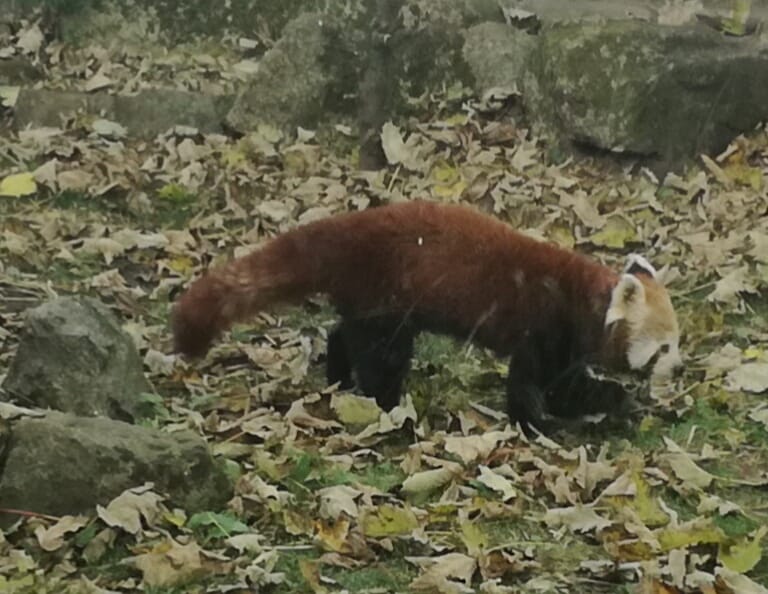
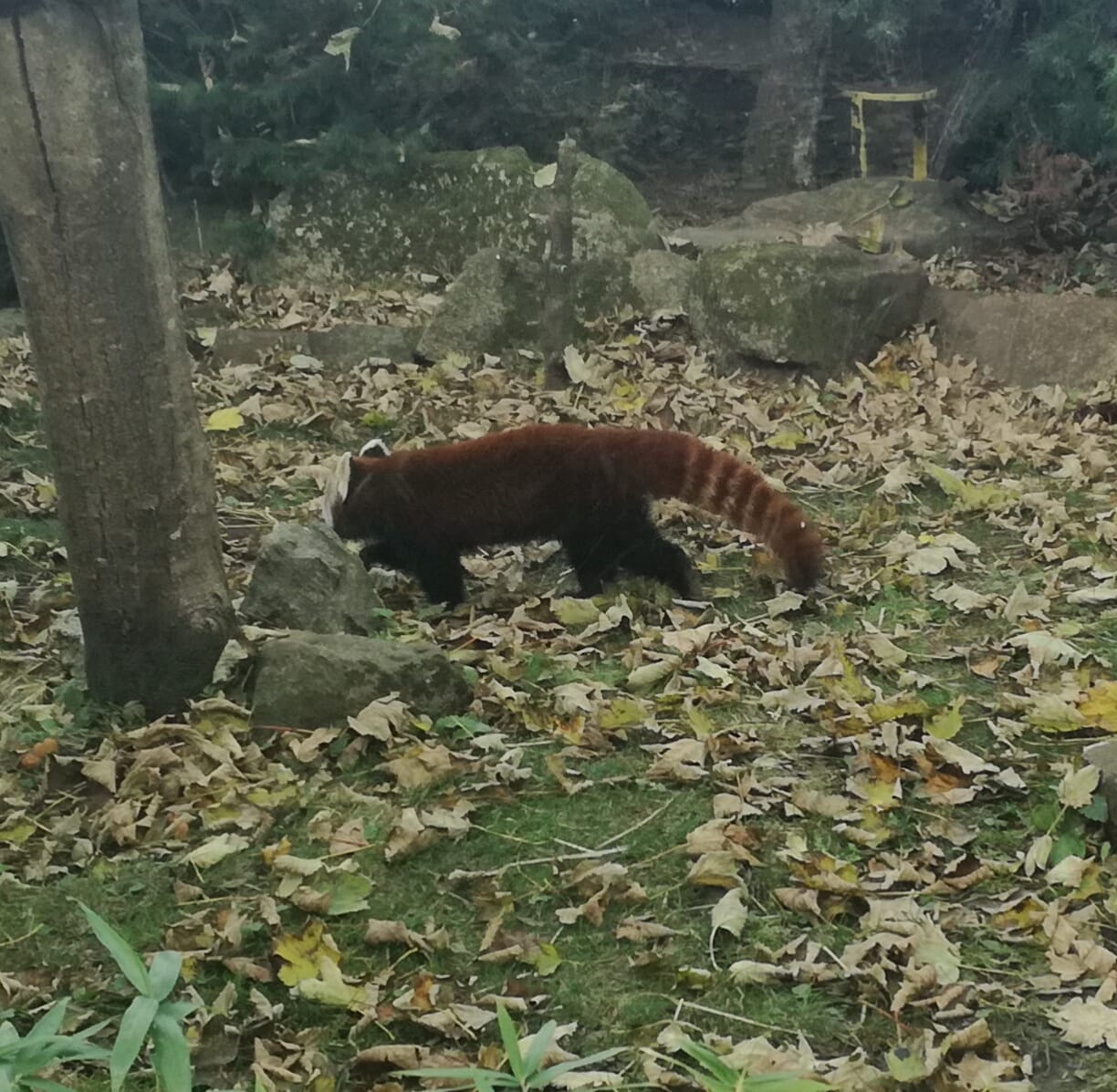
There are three red pandas, named Jai-Li, Suri and Scarlet at Paradise Park.  We only saw two of them- we have no idea which two!

They are very shy animals who spend a lot of time up in the trees.  But on this day they were happy to come and play at ground level.

The beautiful Scarlet Ibis is native to South America and the Caribbean...

The red squirrels were extremely hyperactive, and had obviously had too much caffeine that morning!  This one did pause to pose and show us his nuts, though.😉  This photograph is by the SuperDean- you can see my pink cardigan and camera strap to the side...

Cute guinea pigs in their barn...  

Outside there were goats and sheep, which we got to feed.  It was fun, but it's impossible to take pictures of the hungry little beasts when you have your hands full with feed, and wet muzzles in your palms!

There are four donkeys, named Jasmine, Basil, Periwinkle and Lily.  As we don't speak fluent Eeyore, we had no idea which one this poser was...😁

There is a rather sad tale attached to Talis, the golden eagle.  She's a rescue animal who was bred in captivity, and housed in someone's kitchen in filthy, inhumane conditions.  I mean, what kind of person keeps a golden eagle in their kitchen?  Someone who's not right in the head, that's for sure.
Luckily she was rescued, and her previous owner fined and banned from keeping animals.
She's a beautiful bird, although apparently she's still a bit nervous.  Her story is pinned to the outside of her cage, and strangely I read and remembered her name as "Tails," and it was only on re-reading the Paradise Park website that I realised my mistake.

Caribbean flamingos doing their up-on-one-leg ballet balancing poses for me...

Otters are another animal who are shy, and it's not often that we get to see them.  They remained totally elusive at Blackpool Zoo, are choosy when they decide to put in an appearance at Chessington World of Adventures and indeed, this is the only time they've paid any attention to us at Paradise Park.
These little fellows are called Bruce and Willis, and are Asian Short-clawed Otters.

They are nocturnal creatures who need secluded places in which to rest during the day, getting distressed if disturbed too much.
On this day, we were honoured by this display of catwalk expertise...

Our first night didn't offer us up much of a sunset view.  I had to try and guess where the sun was, exactly...

We had dinner at the Bluff Inn one night, and these are taken from inside.  Here the sun is disappearing, with a bit o' added glare...

The sunsets were occurring at around 6.15 each evening.  I like the way the glare on this photo has highlighted, rather than detracted from the orb shape of the sun...

All gone...
The Bluff Inn gets some criticisms, but we thoroughly enjoyed our meal.  SuperDean had a burger with chips, onion rings and a side of garlic bread with cheese, and I had crab Caesar salad as I love, love, love crab...
(Washed down with copious amounts of white wine, of course...😉)

Walking down to Hayle Towans another evening, and I adore this heart-shaped indentation in the ground.  It's on the walk down to the beach, to the area in sight of the Hayle webcam, where I stood to take my outside photos some evenings...💚

An unspoilt view of the sunset.
Blissful.😊

The sun was much further out to sea along the headland, about where the land meets the water, when we last visited in May last year.
Peer hard and you can see a lonely ship making its way across the horizon...

The two photos above were taken using my phone.  Here are the same two views taken using my camera.  They look darker, but offer a more contrasting silhouette...

I think I prefer the phone version for the above view, but this camera picture for this view.  Somehow, it's more dramatic...

Taken on our final evening and the sun is looking weaker- or is that a psychological thing to think that?  Well, it was mid-October...

Fading...

We concluded our holiday with three nights in Penzance, which we've visited before on a day trip from Hayle.  Here is that blog link:-

We were booked in to see an exhibition at the Penlee Gallery but were early, so we took a walk through nearby Morrab Gardens.
Morrab House, with its walled garden was built by wealthy brewer Samuel Pidwell, in 1841... 

In 1888 the property was bought by the Corporation of Penzance, with the gardens re-designed and opened to the public the following year.  Penzance Private Library moved into Morrab House, becoming Morrab Library, and it's still in use as a library to this day...

The bandstand was opened in 1905 and extensively renovated in 2004...

Taken from the elegantly restored bandstand...

The cast iron fountain was beautiful from a distance...
The sprouting fountain originally used water sourced from a natural spring.

...And even better closer.  The lower section consists of cherubs riding on tortoises...💙

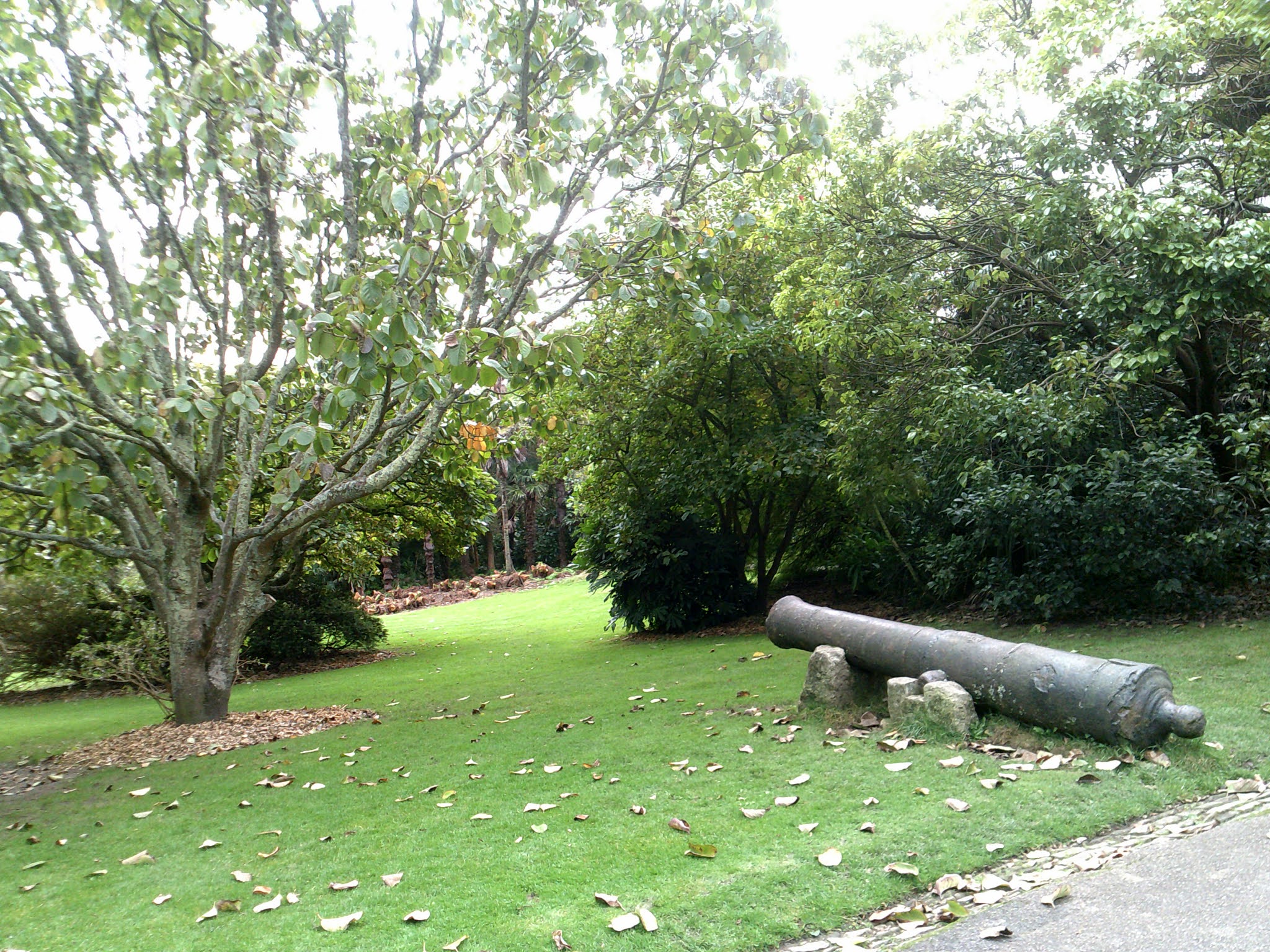
I'm not sure of the significance of the cannon- they were in no way labelled, and perhaps were just decorative...

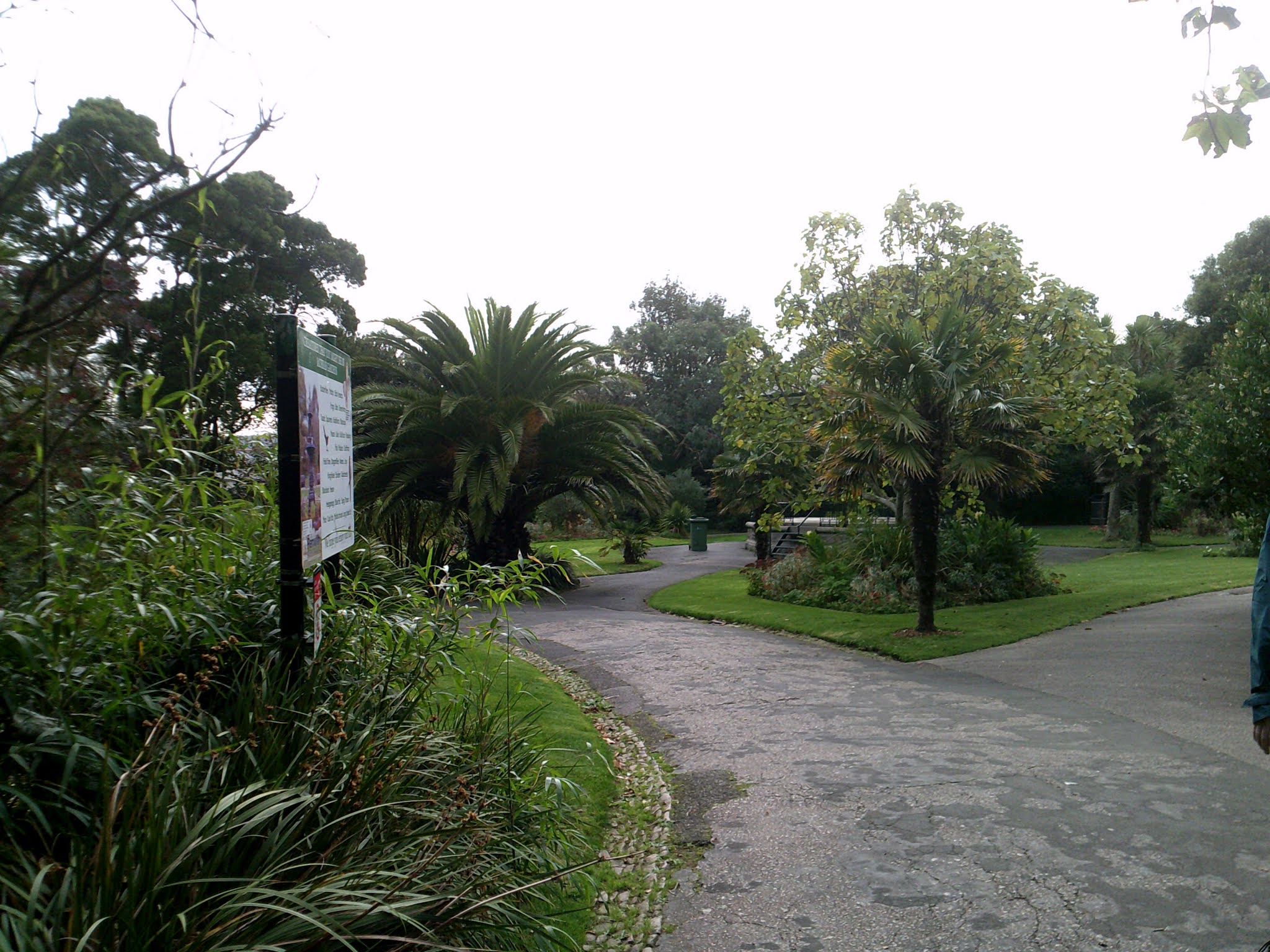
Although they have been renovated over the years, the gardens retain their original layout and curvilinear walks...

White fronds of a spiky-leafed plant spewing out from the wall...

The subtropical climate allows plants sourced from Australia, Africa and the Americas to grow to maturity.
Palms are my favourite kind of tree- yes, this more temperate climate certainly suits me!

The garden was designed by Reginald Upcher, a London based designer.  The garden is a three acre site, and he won 20 guineas as the Borough had opened a competition to find the best design.

There is also a Boer War Memorial statue dedicated to those who lost their lives in the South African campaign in here, erected in 1904, but somehow we missed that - oh well, there's my excuse to return to Penzance (amongst others!) and the gardens sorted...😄
 

Penlee House Gallery and Museum was originally built as a house for the affluent Branwell family (ancestors of the Bronte sisters, on their mother's side) in 1865.  The house was sold to Penzance District Council in 1946, and formally opened as a museum in 1949.

There was a fantastic exhibition called Newlyn School Interiors showing; which included works by Stanhope Forbes, Elizabeth Forbes and Walter Langley.  Part of the Newlyn School group of artists, they depicted realistic scenes of life from Victorian Newlyn.  Newlyn is a fishing village adjacent to Penzance, and the art colony was formed by artists attracted to the area by its cheap living costs, astounding natural light and their interest in the everyday lives of fisherfolk.
Piece of useless information- we were booked to stay in the Westbourne Guest House, which was once the home of Walter Langley, but lockdown meant we had to cancel and rearrange our entire break, so it didn't happen.  At the time, I kept referring to the hotel as "The artist's house!"

Here is a PDF pf my favourite painting in the exhibition:-
A Hopeless Dawn, 1988, by Frank Bromley (1857-1915).
A young woman cries on the lap of her mother-in-law, as her husband is lost at sea.  The relentless ocean can be seen raging through the window.

We walked through the gardens, and this photo was taken at the bottom, looking out over the sea.  Could I live here?  I think so.  

I was convinced that this interesting plant was plastic, and had to reach out and jab my fingernail into it (just a small corner of red leaf, you understand!) to convince myself otherwise.
It was well-and-truly real, and a little research reveals that it's a Fascicularia bicolour, which is also known as a crimson bromeliad.  It's a hardy perennial, meaning it's long-living, and can survive in open air all year round.  I suppose a plant would have to be to be able to flourish in this mild, yet exposed, environment.  You are within sight of the sea, after all... 

The Union Hotel was here in Elizabethan times, when it was thought to be the manor house of Penzance.  It witnessed the Armada and also the Spanish attack on the town on July 24th 1595, when it was set on fire by invaders.  We didn't go in, but apparently smoke-blackened walls can still be seen in the Nelson Bar.
It is from the Minstrels' Gallery in the Assembly Room that the death of Nelson, and the victory of the Battle of Trafalgar was first announced in this country in November 1805.

This unusual building dates from 1835-36, and is known as the Egyptian House.
It is thought to have been built by John Lavin (although there is some dispute as to whether he was the architect or not), a mineralogist and Egyptologist.

Later neglected, its refurbishment was revealed in 1973.  It is now divided into three holiday apartments.  Whilst I was photographing it I got talking to an old boy on the pavement, and he mentioned that his children had treated him and his wife to a few nights there for their wedding anniversary.  What a lovely gift- rooms are close to £100 a night even for an October weekday.💜 

This house was once the home of Maria and Elizabeth Branwell- they were the mother and aunt of Charlotte, Emily and Anne Bronte.  Maria was from a prominent Penzance family, and left for Yorkshire when she got married in 1812.

The Abbey Basin Quays and Slipway.
This is where boats can sit in dry dock.  Abbey Slip, to the right, leads up onto the main section of the town.  

To the left of this similar view you can make out St Mary's Church.  The present building dates from 1835, although the use of the site for worship dates back possibly as far as the 12th century.

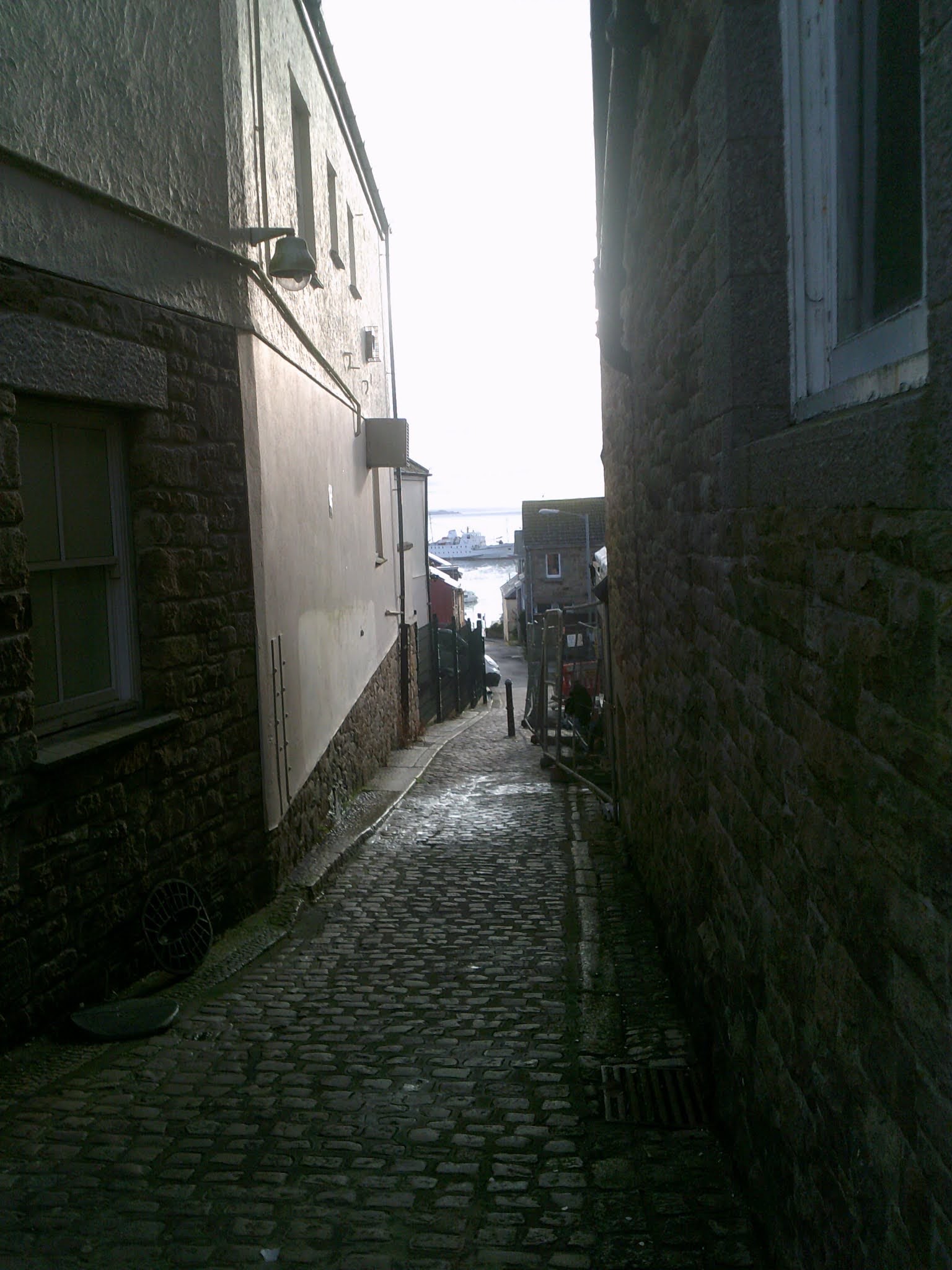
One final glance down a side street, and the Scillonian III was sitting in the dock, having a day off.  It doesn't sail every day in October.

The SuperDean outside our Premier Inn hotel, eyeing the pirates mural.  
Of course, the obligatory scum had graffitied on this wall... 

The Royal Albert Bridge was opened in 1859, was designed by Isambard Kingdom Brunel and carries the Cornish Main Line Railway (which runs from Penzance to Plymouth), part of the Great Western Railway.
This was taken from the train.  I'd left Saltash and was approaching Plymouth, and it's hard to take a photo of a bridge whilst your actually on it- I don't think I've done too badly, though!

The bridge spans the River Tamar...

If you want a more detailed review about Plymouth, then I've been there before, and here is the link:-

I will return down this way again- I want to visit the Scilly Isles for a few days in the future, and that will involve a stop-off in this part of the world.

Until then,

TTFN

The Miss Elaineous

XXXXX
XXX
X